Virtual Pet Apps That Grow When You Walk
The Tamagotchi trick works on adults too — but only if the pet can't die. Here's how walking-based virtual pet apps compare, and which design actually keeps you walking.
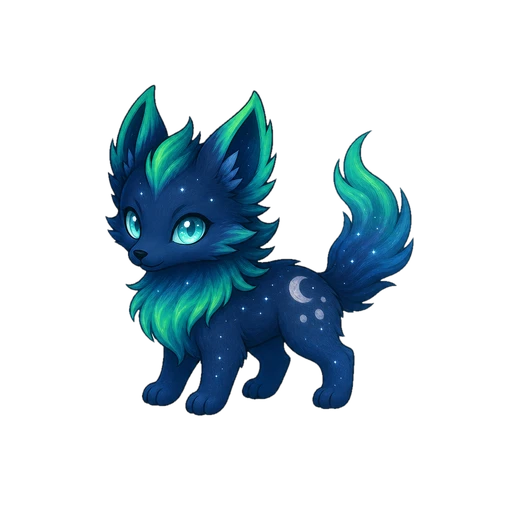
Tamagotchi worked on ten-year-olds in 1997 for a reason that has nothing to do with being ten: it converted an abstract obligation into a creature with a visible state. You weren't remembering to press a button. You were looking after something.
Walking apps have been trying to reproduce this for a decade, with wildly varying success. The ones that work and the ones that don't differ on a single design decision, and it's not the one most people check for.
The decision that matters: can the pet suffer?
Original Tamagotchi pets died. That was the tension, and it's why the toy was a phenomenon and also why most of them ended up in drawers.
Applied to a walking app, the death mechanic backfires badly. The mechanism is straightforward: the days you don't walk are, overwhelmingly, the days when something else in your life went wrong. You were sick, working late, travelling, or flattened. An app that responds to that by making a creature you like visibly suffer isn't adding motivation. It's adding a small, well-timed dose of guilt to your worst days.
And guilt makes people avoid the thing that generated it. That's not a character flaw, it's how avoidance works. So the app gets deleted, usually within a week of the first bad stretch.
The design that survives is one where the pet can only ever be pushed forward. Skipping days means slower progress, not damage. Nothing decays, nothing dies, nothing has to be nursed back. When you return you pick up exactly where you were.
This sounds soft. It's actually the difference between an app people use for a year and an app people delete in March.
| Design | Feels like | Outcome |
|---|---|---|
| Pet decays when you don't walk | Obligation | Deleted after first bad week |
| Pet pauses when you don't walk | Something in progress | Survives bad weeks |
| Pet requires daily interaction to survive | A chore | Deleted faster |
| Pet rewards interaction but doesn't require it | An option | Sticky |
Check this before you install anything. It's usually visible in the App Store reviews — search them for "died" or "guilt."
What's available
EggVentures — egg → creature → evolved forms
Your steps warm an egg toward hatching, and the creature that emerges evolves through further stages as you keep walking. Twenty-plus families, rare dyeable variants rolled on hatch, a fusion system that spends duplicates for better rare odds or combines two families into a third, and trading with other players.
On the question above: there is no care layer at all, which is the point. Nothing to feed, nothing to keep alive, nothing that decays. Skipping a week means your creature is a week further from its next stage, and that is the entire penalty. You cannot neglect it, because there's nothing to neglect — the only input is walking.
- Death or decay: none
- Steps source: Apple Health / Health Connect, background
- Works indoors: yes
- iOS · Android
Steps & Beasts — creature collection from step count
Same broad category. Step-driven collecting with a gentle posture. Worth installing alongside and keeping whichever one you'd rather look at daily.
Pikmin Bloom — a crowd rather than a pet
Not a single creature but a growing squad of Pikmin, plus flowers planted along the routes you walk. The warmest-feeling app in the whole category. Requires GPS, so it doesn't work on a treadmill — see Pikmin Bloom alternatives if that's your situation.
Walkr — a galaxy instead of an animal
Your steps fuel a spaceship and populate planets. Same emotional loop, no creature. Included because for some people the pet framing is exactly the thing they don't want.
Pokémon GO's buddy system
A pet layer inside a much larger game. Your buddy walks with you, earns candy from distance, and Adventure Sync credits it in the background. Fine if you already play; not a reason to start.
Why the pet framing works at all
Two things are happening, and it's worth knowing which one is doing the work for you.
It converts a number into a state. "6,412 steps" is information. A creature that's visibly two-thirds of the way to its next form is a situation — one you're in the middle of. Humans finish things they've started far more reliably than they start things they've merely intended.
It supplies a same-day reward. The health benefits of walking are real and arrive over decades, which makes them almost useless against a specific cold Tuesday. A creature that moved today is a reward that landed today. That's the timescale habits actually operate on — see building a walking streak that survives bad days for why this matters more than motivation does.
Neither of these requires the app to be a good game. They require it to be present and to visibly respond. Which is why simple apps in this category often outperform elaborate ones.
The bookend, not the care loop
Here's the counter-intuitive bit. The apps in this category that hold people longest tend to have less daily maintenance, not more.
A care loop — feed it, water it, keep it happy — sounds like engagement and behaves like homework. It generates obligation, obligation generates guilt on the days you skip, and guilt gets apps deleted. The pet framing works because it gives the number a state you care about, not because it gives you chores.
What does work is a bookend: something small before the walk and something waiting after it.
In EggVentures that's an expedition. You send a grown companion out for a chosen duration before you leave, and it returns with eggs of its own family. Nothing happens during the walk, deliberately — the phone stays in your pocket and your steps sync in the background.
Twenty seconds at the door: open it, start an expedition, and go. Collect when the timer's up.
That's the whole interaction. Two touches a day, no maintenance, nothing that suffers if you skip. If a pet app is asking you for more than that daily, it's asking for engagement rather than giving you a reason to walk.
What to check before you install
- Does the pet decay, die, or need rescuing? If yes, skip it.
- Does it read steps in the background? If it needs the app open, it will not survive your normal week.
- Does it work indoors? Anything GPS-based won't. Check if you walk on a treadmill or in a mall.
- Is the monetisation gating progress or cosmetics? Cosmetics are ignorable. Progress gates turn a walking app into a nagging one.
- Would you be happy looking at the art every day for six months? Sounds trivial. Isn't.
For the wider field including non-pet options, see the best walking games that reward your steps.
Frequently asked questions
Do virtual pet walking apps actually work for motivation?
For a lot of people, yes — the mechanism is that a pet converts an abstract number into something with a state you feel responsible for. The research on 'implementation intentions' and identity-based habits supports the general shape of this, though there's no good evidence on these specific apps. It works better for people who respond to care and progress than for people motivated by competition or data.
What happens to my pet if I stop walking?
It depends entirely on the app, and this is the single most important thing to check before installing. Some let the pet decay or die. Better-designed ones simply pause — progress stops accumulating but nothing is lost. Pick the second kind unless you enjoy guilt.
Can a virtual pet app replace a fitness tracker?
It doesn't replace one — most read from the same source. Apple Health and Health Connect already record your steps from the phone or watch; the pet app is a layer on top that gives the number a consequence. You can run both.
Are these apps for kids or adults?
Both, and mostly adults in practice. The audience for step-based pet games skews toward adults who find abstract fitness goals unmotivating — the same people who bounced off step-count dashboards.
Your next walk could hatch something
EggVentures turns the steps you already take into pets that hatch, grow, and evolve — no GPS staring, no battles. Open it for twenty seconds before you head out, and there's a payoff waiting when you get back.